
With the reality of the virus being around for at least the coming year, countries are grappling with ways to keep their economies going while controlling outbreaks and thereby death rates. Italy is re-opening but is doing so in small steps, cautiously and with enforcement. Perhaps this is why, contrary to my expectations, there have been no new spikes in cases in this country even four weeks since the first new measures for rebooting the economy.
It is very clear that the best way forward is to practise containment which essentially means testing anyone with symptoms, tracing the contact history of those who test positive and containing (quarantining) all those with whom the infected person came into contact. Furthermore, places that serve the public need to follow rigid sanitation and distancing procedures in order to keep the virus from spreading easily. This puts a lot of pressure on businesses that are being allowed to reopen, especially restaurants and bars because it is up to the management to ensure that clients comply and not everyone wants to. More and more Italians are becoming frustrated with not being able to socialise freely, the youth in particular.
The implications of all this were brought home to me when I attended our village council meeting last week. Although we are not yet allowed to assemble, special permission is granted to local bodies that need to meet for administrative purposes. We met in our village circolo, our community center that functions as bar and pizzeria when it’s not being used for a village event or meeting. The €350,000 that it cost to build was saved up over 31 years of events put on entirely with volunteer labour.
The idea started with a yearly village festival that took place in the piazza with the different kitchens based in nearby fields and small squares. The hunters grilled meats and the women who were known to bake the best cakes worked together. Each year the festa drew more people as it hired a local DJ, staged parades, and opened an ad hoc village museum.
Soon it was so big it had to be moved downhill to the campino, a small terraced sports field where the village football team used to practise. (Running down the mountain to retrieve the ball kept the players so fit they won several local championships in their time.) The village built a solid terrace and installed a large metal shack with a second-hand commercial kitchen, dishwasher, a bar and space for inside tables. The bar was open every evening during the summer and Saturdays became pizza night, all staffed by volunteers. We too helped out, bussing tables at the festa with the youngest volunteers and, once our Italian improved enough, being promoted to wait on tables. Profits were saved up to build a permanent community center.
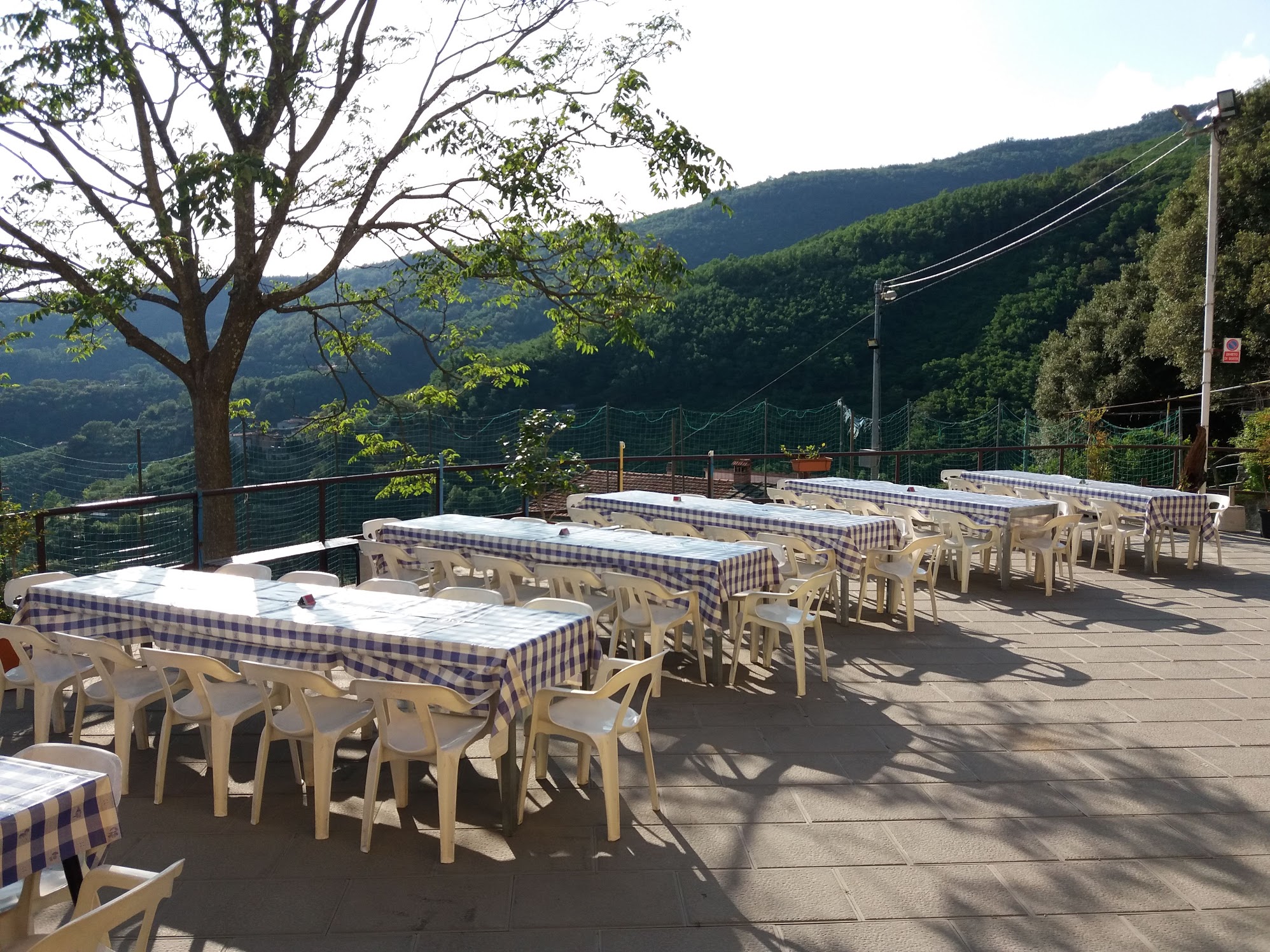 The dream became a reality about six years ago. Our new circolo, still referred to as Il Campino, is surrounded by a large terrace filled with tables in the summer. Locals, people from surrounding villages and city folks enjoy eating outside overlooking the valley and hills beyond, and on most warm nights more than a hundred people are served. Over the past decade, however, the number of volunteers has dropped off. The reasons are numerous: too elderly to help, family needs, disheartened, burned out, moving on to something else. Last summer the same six people slaved away every Saturday for the 12-hour shift and, not surprisingly, were very disgruntled by the end of the season. No one wanted to repeat this exhausting experience… but if we don’t keep the circolo open and running, the commune (municipality) will take it over.
Imagine how relieved we were when a young man from a nearby village approached us last fall with his willingness to run the pizza nights for us throughout the year. In fact, he and his parents with a few rotating volunteers served pizzas every Saturday evening throughout last winter. Of course, all this was cut short by the Covid 19 lockdown. With restaurants and bars now allowed to reopen, he is eager to start up again. What’s more, local people look forward to the summer when the bar is open in the evenings and one can congregate on the terrace with a snack or drink to play cards and chat. It is part of what defines summer for us.
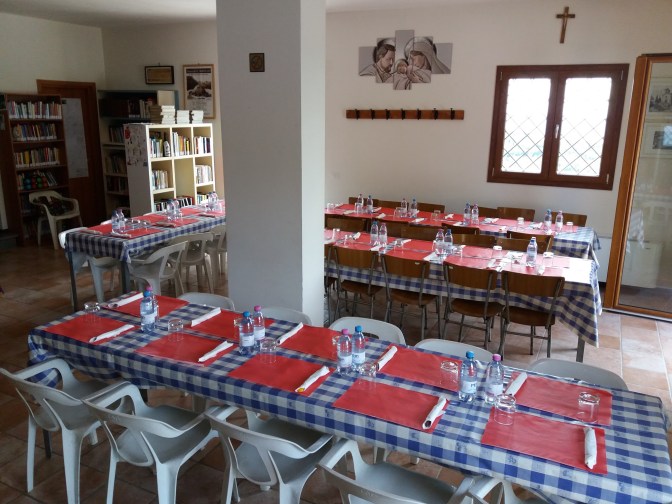
The village council meets in the bar downstairs under the impersonal white lights. The place feels forlorn and disordered. A few empty beer bottles and glasses line the counter, tables are pushed carelessly aside and chairs are spaced at random through the room trying to avoid the column in the middle, on the walls around us familiar drawings of our village stare blankly. Our president sits behind a table in a corner of the room, a notebook and pen in front of her.
The mood at the meeting is unusually sombre given that we haven’t seen each other for several months. It’s difficult to feel a friendly connection when you can’t physically touch anyone, you can’t buy a drink, you have to sit two meters apart, the air coming in the open windows and doors is chilly, and everyone is wearing a mask. One councillor has brought hand gel that is passed around before the meeting and then again while she explains the onerous list of regulations that need to be followed precisely by restaurants that open for business now.
Without going into detail, the list includes sanitising the entire building (including all surfaces and furniture, windows, doors and walls) with denatured alcohol or bleach both before opening and after closing, cleaning the bathrooms multiple times while guests are present, having hand sanitiser available for all to use, keeping an accurate record of all people who enter the establishment and the time of their arrival and departure, checking the temperature of all staff upon arrival, sanitising the tables and chairs once a party leaves, not allowing any people who do not share living quarters to be seated together, keeping chairs at least one meter apart and tables several meters apart. Not to mention the rules for kitchen and serving staff.
As I listen to the list of regulations, I try to think of a way we might be able to manage a reopening, but it becomes clear that the risk and responsibility is too great for us to take on. Restaurants have to apply to reopen and can expect unannounced inspections. If a customer or staff member becomes infected with the virus, the records of all those in the building at the time must be handed to the authorities. Given that our community center is run by our local village council, we are responsible for any sanctions or fines imposed on this establishment. Our funds are limited.
We vote half-heartedly but unanimously. Unless our young man can get all the necessary licences and certificates to officially and independently take on management of the business, our circolo will have to remain closed until regulations relax.
What will it mean for the future of Il Campino, built from thousands of volunteer hours, if we remain closed? Up here at the end of a narrow, twisting mountain road, will we be forgotten? In this age of television, internet, and social media, will the fabric of our village community become threadbare? Although no one voices these questions, I know they are running through everyone’s mind. We see the sadness reflected in each other’s eyes as we say good-bye. For the past three years we have worked together tirelessly to keep Il Campino open and to stage events celebrating our mountain identity that will bring the village together and will increase our visibility in the region. The income from these activities is vital to keep the community center going and to fund village improvements. Now we have to resign ourselves to an uncertain future that is, for the time being, beyond our control.
I appreciate the many small family businesses for whom the decision to reopen is a financial necessity even if earnings will be hard hit during this pandemic and even with the risk of contagion. I also sympathise with young people who are frustrated with how the safety measures are limiting their activities and freedoms but encourage everyone to savour the small blessings of being able to see each other again even at a distance, to enjoy a drink and meal out without endangering others, and to spend time outside in natural surroundings. Forbearance, compassion and courage are what these times call for. Are we up to it?

 Olivia's Journal