
5th June
Maybe because it rained most of April and much of May, maybe because countries are determined to open their borders to tourists and visitors, maybe because we haven’t yet been able to host volunteers to help us, but we are feeling overwhelmed with everything that requites our attention.
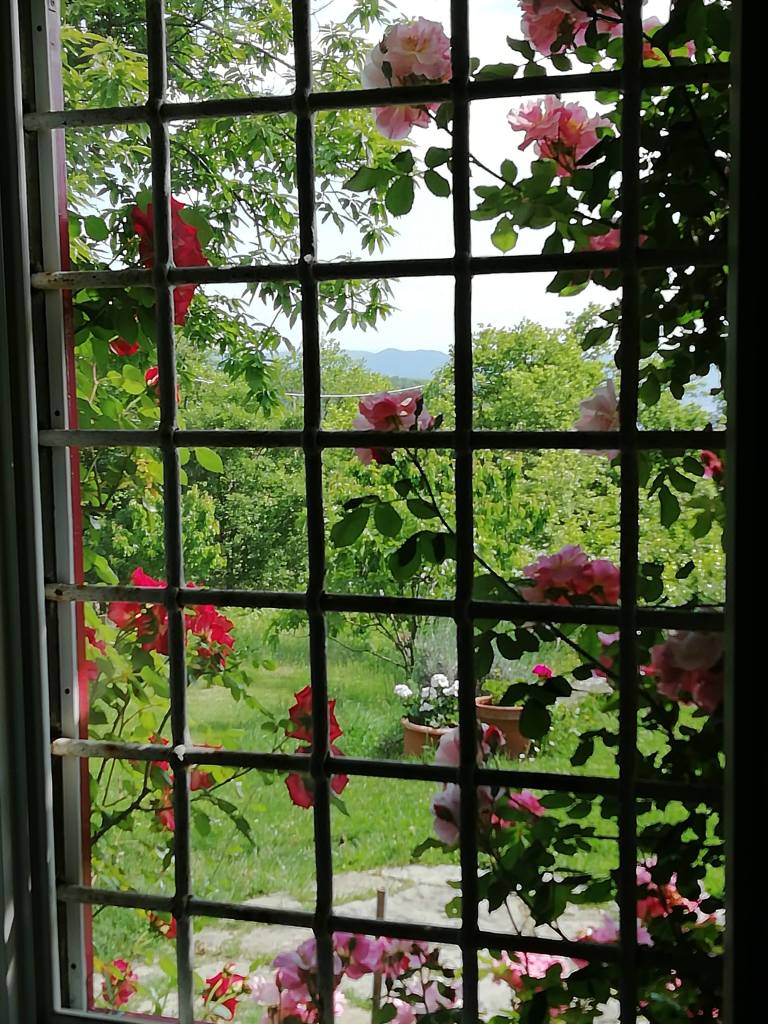
Spring into summer, this time of year, is a busy season. The grass seems to grow several centimeters a day. Our village is eager to open our community center “Il Campino” for the summer, offering a bar in the evenings and pizzas on Saturdays, all volunteer run. Guests have already booked our guest house for two weeks this month. The weather has suddenly turned warm and all the leggy seedlings need to be planted now and then mulched and watered. The bees needed extra feeding during the cool rainy spring but now are nearing the end of the acacia flowering which means harvesting that honey to make room for the chestnut honey. The winter cabbages pulled out to make room for this year’s beans wait to be preserved into sauerkraut or kimchi. The website for our village needs to be finished, t-shirts ordered with our new logo which needs to be finished, and flowers planted to add color to our piazza and other public spaces.
My mother arrives the end of this month to stay with us and other family as well are hoping to visit this summer. I plan to take ‘time off’ from village events to relax with them.
*************
16th September
Today it is raining – blessed rain after such a hot dry summer without relief.

The heat was intense causing dehydration – fatigue, dizziness, nausea. Our last two chickens died of heat stroke when the temperatures reached in the upper 30’s Celsius. We barely kept our vegetables alive and our harvest has been poor except for figs, tomatoes and grapes. The chestnut trees were dropping leaves by the middle of August and a carpet of red leaves encircles the maple tree. Two pears hang from the bare branches of my small “miracle” pear tree. There are few olives this year and the blackberries are for the most part wizened for lack of water.
I wonder what we can do to adapt. By all accounts, what we consider extreme weather patterns are part of a new normal which, given the blindness of conservative politicians, half-hearted government targets, short-sighted corporations and continued fake news, is our future and it’s bleak. Will we look back on this summer, this period of the pandemic and say, “That was when it struck us that what we thought of as our climate would never be the same again”? The solutions I think of are small and local – planting shade trees around the garden, trying to find a water source on our property… but the problem is huge and encompasses the whole globe and the challenge requires us as humans everywhere to be united in working on this and in helping each other.
As in any challenge, the most common responses are fight or flight. Some are taking to the streets, supporting organizations addressing the climate emergency, lobbying to change government policies that are outdated. Many feel overwhelmed to the point that they don’t want to think about it. For all of us, the climate crisis is one of uncertainty, one that exposes how fragile and vulnerable we actually are.
In fact, the pandemic has been very similar in its psychological effects with its near-constant inconstancy and series of lockdowns. We have all been changed by the experience. For some of us, being in one place (home), tending only to our needs, having everything under control was a welcome retreat from the stresses of the outer world and the readjustment to the social and economic realities of “everyday life” are surprisingly taxing. For some of us, being forced to stay at home meant repeated rearrangements in terms of school and work, noise and focus, routine, structure, order, freedom, space, time, silence. Social, personal, and work balance were all thrown into disarray again and again. While some of us had too much time to reflect on what was happening, some of us had less than no time.
This summer we started to emerge, both shell-shocked and bold, both eager and a little fearful. At least that was my experience, with seeing family members whom I hadn’t seen in a long time. Everyone was starved for connection yet at the same time needed space and time for oneself. We found it more difficult to hide our anxiety, our emotional vulnerabilities. We wanted so much to take care of each other and were more sensitive and frustrated when we fell short. We needed to find each other again.
All of July, I experienced an unbearable tension between the need to reconnect with my family and all the chores and work that begged to be taken care of, which I took as my responsibility. I was striving to keep up with my vegetable garden, my flowers, caring for our chickens, walking our dog Caleb twice a day, cooking meals, and stepping in for those who at the last minute couldn’t volunteer for village events to shop, set up tables, serve food and clean. I felt stressed and angry at being pulled away from my mother and my daughter into all my duties and commitments. The two were wonderful about it all and very understanding. They even helped out. But I suffered through it, worn down by the constant readjustments while the time with loved ones was slipping away.
“Tomorrow, tomorrow I’ll step back. I’ll stop this madness. Tomorrow,” I’d tell myself. Was it the three-day hike in the mountains, was it the arrival of my grandchildren, was it the heat wave? Whatever it was, in August, I finally managed to let go. I let go of the lists, of the must-do, of the struggle to juggle it all, keep it all going. And it was hard, hard to see my vegetables inundated with weeds and hard to keep myself from helping out at village events. The website and the t-shirts didn’t happen. I didn’t get around to making sauerkraut or dill pickles. We never cleared under the olives. Some of the tomatoes rotted on the vine, some dried up, the onions are still in the ground unharvested. I didn’t write, I didn’t cook all the wonderful dishes I had planned to cook.
What I did was spend time with my children and my grandchildren. I played, cuddled, swam, explored, read, discussed, laughed, listened, held, marveled and reflected, and I let go not only of keeping on top of things but also of worrying about it. I even started to play the guitar. I allowed myself to stay in the moment and space that required me most.
Let go, hang on, stay focused, stay flexible, become resilient, think ahead, think on your feet… The global crises we are living through require all of this which means listening, observing, staying connected to all around us and adjusting. It’s what any game or challenge or journey requires and whether we like it or not, we’re in the middle of it now.


Olivia
I am so moved by your heartfelt and honest bulletin – the struggle between intentions/hopes and real-moment needs, in the global context.
Kay
LikeLike
Olivia
How vividly you capture the conflict between the personal/familial and wider social and other calls on our attention and our time, especially in this age of multiple crises. Your penultimate paragraph brought a sense of relief so convincing that I felt as if it was I who had just made this transition.
There is much in your vivid evocation that resonates for me despite the many differences in our situations.
John
LikeLike
Thank you, John.
Although I don’t find it possible to live in a constant state of “letting go”, I have noticed that having done it once has given me a healthier perspective on my lists of “should” and “have to.”
LikeLike