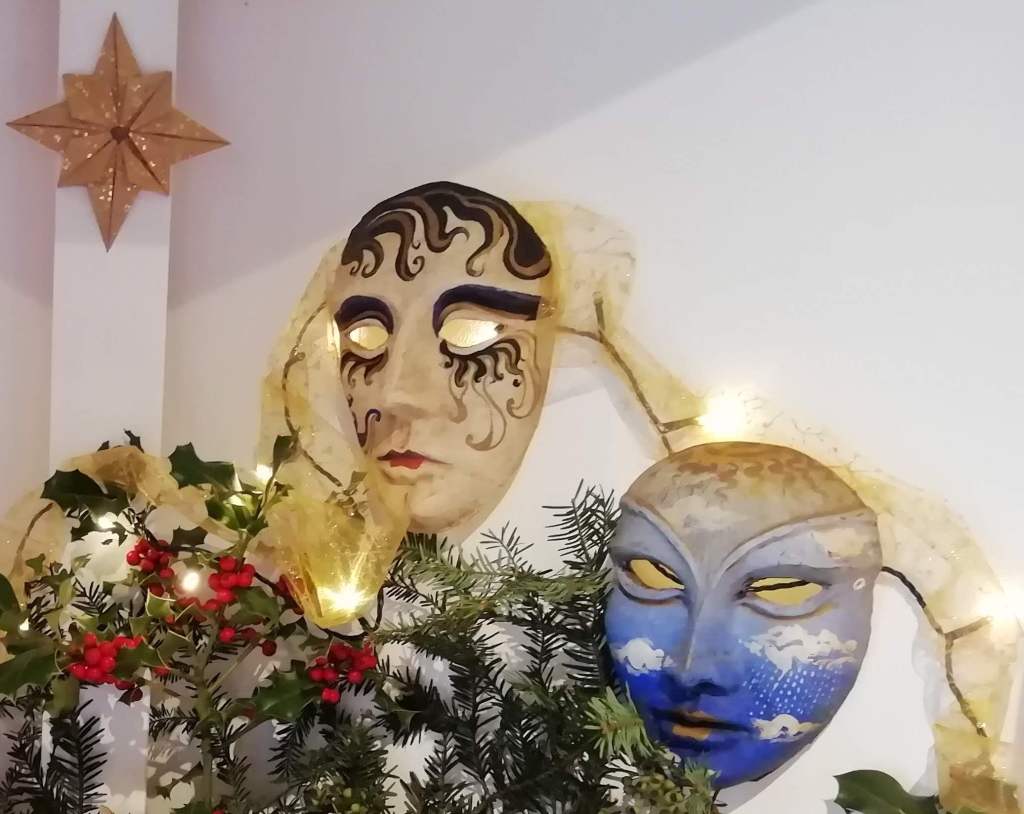
The other evening at a village council meeting, I was suddenly struck by the scene of this round of human beings transformed through our masks into comical creatures with snouts and beaks. My new conspiracy theory is that this pandemic has been engineered by a bunch of scientists who want to turn us all into hybrid beasts without mouths and with no sense of smell. Then these mad scientists will take over the world. Madness? Well, yes, many conspiracy theories are pretty unrealistic once you start to question the details.
So where are we now in our mad world? What are we learning – or failing to learn?
It’s interesting to see how different countries have been responding over time to this pandemic and noticing the differing effects. There are so many factors that democratic governments are considering in navigating these muddy rapids. First of all, the opinions of the politicians in power and those of their popular base. The more conservative the government, the more unwilling it is to “crackdown” on COVID and the more onus it puts on the individual’s freedom to decide. Also, lockdowns and the ensuing social and economic repercussions have been tough on mental health. Governments are cautious about wanting to ramp up mandates and restrictions that are viewed as authoritarian or even draconian. How much better to let the public experience a bit of freedom to make its own decisions, to return to pre-COVID normality.
Although I agree that one must remain ever attentive to government mandates on its population, I must side with the Italian government’s handling of this pandemic. The mask-mandate for crowded and indoor public spaces has remained in place despite the lowest levels of contagion in Europe. I don’t think anyone here particularly likes wearing a mask but nearly everyone complies even with the compulsory use of a personal “Green-pass” to access the workplace, restaurants and public venues. The Green-pass QR code (which affirms that the person is either fully vaccinated, has recently recovered from COVID or has had a negative COVID result in the last 48 hours) can be downloaded onto a phone, as can the scanner application to verify the Green-pass.
In my experience, few have seemed unwilling or annoyed to show their pass or QR code when asked. On the contrary, this system actually gives people a freedom of movement. Anyone can comply, even anti-vaccers with a lateral flow test up to 48 hours before having to use their Green-pass. This system also minimises anxiety of those who are vulnerable to the virus but wish to be able to be able to go out and meet up with friends. Yes, contagion still happens but the chances have been slimmed down. And within these regulations, Italians are free to socialise, tourists are coming to Italy again, and businesses are open and doing reasonably well.
This doesn’t mean that there is no opposition to vaccination and passes in Italy and that people aren’t speaking out. In fact, there has been much debate in the Italian media about vaccinations and the compulsory use of the “Green-pass.” However, compliance is high and although vociferous, the opposition is comparatively small. Maybe it’s because Italians are more obedient, follow the status quo, as good Catholics like to do the right thing… On the other hand, maybe in this family-centred country there remains still a sense of collective responsibility. Because in the end, the reason for wearing a mask and for getting vaccinated has more to do with that than with individual freedom.
I would not be happy if I were to have surgery at a hospital and the surgeon were to walk into the operating theatre wearing street clothes and operate on me without a surgical mask or gloves. The surgical mask is worn to protect the patient (not the doctor) from picking up harmful bacteria. Those are the scientific facts that are easy to forget. We keep thinking that wearing a mask protects us. It does in a very limited way but 80% of our protection comes from other people wearing masks. In short, one wears a mask to protect others.
Similarly, with vaccines. ‘Herd immunity” in the human population has to do with a large enough percentage of the population becoming immune, either through anti-bodies or through vaccines. The reason why so few unvaccinated children get measles, for example, is because most children are vaccinated and that keeps the infection rate close to nil. It’s a question of one’s communal responsibility not of individual freedom. And under the present circumstances, we need to focus on our collective responsibility to safeguard the greatest number of people.
By now most of us are familiar with that inner voice calling out: ‘I just want things to be normal again!’ These words come to mind:
When one door closes, another opens; but we often look so long and so regretfully upon the closed door that we do not see the one which has opened for us.
Alexander Graham Bell
Wouldn’t it be more constructive if our rebellious ‘no fear’ pride in taking life and the future into our own hands were based more in a belief in collective responsibility rather than in the rights of the individual over government interference? This applies as much to the pandemic as it does to the climate crisis, structural inequality and our imperilled democracies. Unfortunately, the idea of individual freedom is considered such a core of the economically-dominant English-speaking cultures that it drives corporate greed and political arrogance world-wide and this habitual way of thinking is at the base of many of the problems we are now facing.
Free speech to say anything one wants, individual freedom to do anything one wants, free market encouraging free choice and endless consumerism fostering healthy competition. It’s all part of the same bubble. A bubble that has long been equated with progress, upward mobility, and democracy. Unfortunately, over time, the ‘freedom’ aspect has come to overshadow attributes that build commonality such as consideration, tolerance and respect, moderation and cooperation.
The idea of ‘pay it forward’ was very much a part of village culture when my parents first arrived here. Their furniture was brought up on the backs of sturdy men, walls were rebuilt by a skilled local friend, the old chestnut trees were pruned by a villager who knew trees like the back of his hand. After each job, when my father tried to pay, the reaction was one of personal affront until my father learned to bring gifts of cigarettes and liquor to show his gratitude instead. Those men had grown up in a village in which everyone shared in keeping up the main roads and paths and people preferred to be owed a favour than to owe one.
But that was forty years ago. Today, except for the elders of the village now in their eighties, everyone expects to be paid for anything other than a small favour. Perhaps this is also part of the reason why we have such a difficult time finding volunteers to help out in the village community pizzeria. And yet I find that there is still a sense of looking out for each other and that behaving with respect and courtesy to a stranger is generally expected. Surely, this kind of social behaviour is something to build on.
Lately, I’ve been reflecting on how my own habitual patterns of thought have created habitual patterns of behaviour. Life has given me numerous opportunities to change these but unless my habit has been challenged by another person, by circumstance or by my own reflection, I don’t necessarily recognise these opportunities to change. Fortunately, Life is patient and it serves up opportunities again and again and again, sometimes gently sometimes painfully, until I find a way forward.
Just as Life challenges us on a personal level, it does so on a large scale such as pandemics, wildfires, extreme temperatures, sea-level rises. It is saying: there is no more ‘getting back to normal’ and it is reminding us that on this planet we are all interconnected. Hiding behind the mask of individual freedom to do what we want while waiting for a knight in shining armour to slay these dragons is a fantasy.
The reality is that each of us must reshape our habitual line of thought from I-me-my to we-us-our. Yes, fear and yes, courage. Embrace them both. I take my inspiration from the younger generations. Young people speaking out eloquently and passionately to demand change, demand justice, demand a future, joining their voices because they understand what we have forgotten: they understand the importance of collective responsibility.
I was amazed to read recently about how some bee populations are adapting their behaviour in response to the Varroa destructor mite, a parasite that can lead to the collapse of the entire colony in just a few months if left unchecked. One study found that in certain hives, those bees infected with the mite stay close to the entrance of their hive rather than approaching the center of the hive where the mite could infest the brood cells and therefore infect the next generation. Furthermore, worker bees are evolving to groom the parasites off of their infected sisters in order to resist the Varroa’s cycle of destruction. If these small creatures can change centuries of behaviour in about three decades, it is absolutely possible for humans to adapt our habitual behaviour.
In turning away from the closed door and stepping toward the open door, we each need to decide which risks we are willing to take and which changes we are willing to make in order to improve our chances of a safer future. I only hope that in making those decisions, we can think as much of the collective, and future, “we” as “me.”

 Olivia's Journal
Very on point, as per usual Olivia. Your writings and thoughts are nutrition for my brain.
LikeLike
Thank you, Audrey. I wish you much resilience and flexibility. Un abbraccio forte.
LikeLike